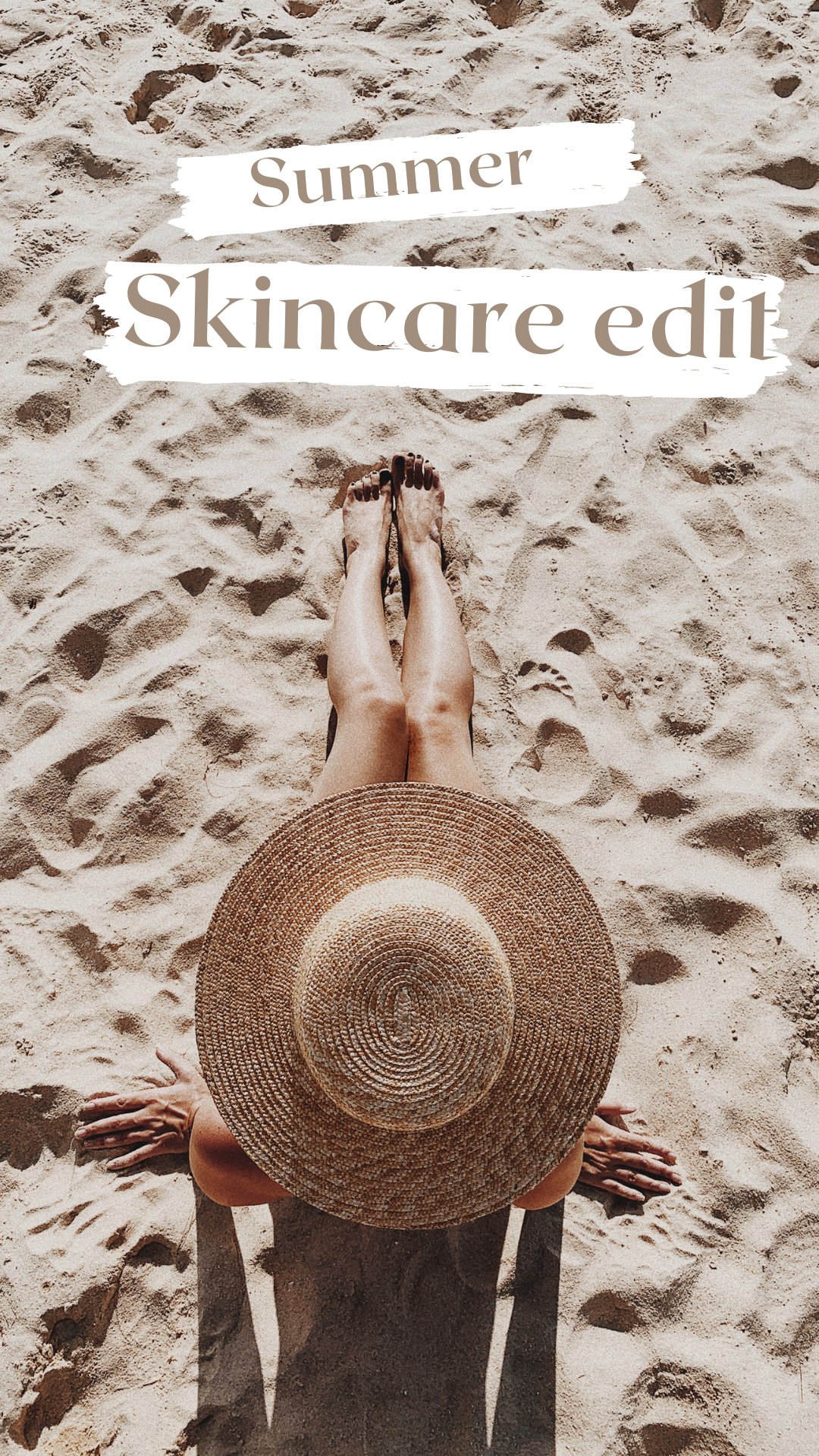
Why summer is different for anti-aging skin
Every season asks something different from your skin, but summer is uniquely demanding. UV radiation is at its annual peak — UVA rays (the ones responsible for photoaging, collagen breakdown, and hyperpigmentation) penetrate glass, clouds, and windshields year-round, but UVB intensity surges between May and September. For anyone who has invested in actives, devices, or in-office treatments, summer is the season where those investments are most at risk.
Heat and humidity change how your products sit on skin and how your barrier functions. Products that felt perfect in February can pill, break down, or feel suffocating in July. Sweat alters your skin's pH. And the active ingredients that are doing the most work — retinoids, AHAs, exfoliants — also make your skin more photosensitive, which means the stakes for sun protection are higher than ever.
This isn't a reason to abandon your routine. It's a reason to edit it.
- UV intensity peaks — UVB burns, UVA ages. Both are at their worst May through September
- Heat and humidity affect how products absorb and perform
- Sweat breaks down SPF faster — reapplication matters more
- Retinoids and AHAs increase photosensitivity — SPF becomes non-negotiable
- Heavier moisturizers and occlusives can feel suffocating and clog pores in heat
- Post-procedure skin is especially vulnerable — timing of treatments matters
Sun protection beyond sunscreen
SPF is the foundation — but it's not the whole structure. Most people apply less than the recommended amount (a full teaspoon for the face), skip reapplication, and forget that SPF on skin doesn't protect the skin you aren't covering. A comprehensive sun protection strategy goes further than what's in a bottle. For the full breakdown of mineral vs chemical filters and how much to apply, see the complete SPF guide.
The SPF edit
For face, I want something that absorbs cleanly, doesn't pill under makeup or other products, and that I'll actually reach for every morning without thinking about it. ISDIN Fusion Water Magic SPF 40 is my everyday — it's weightless and disappears completely. For touch-ups over makeup, the Supergoop Glow Stick SPF 50 is the product I keep in every bag.
For body, SPF often gets skipped because most formulas are greasy, slow to absorb, or leave a white cast. The Supergoop Play Antioxidant Body Mist SPF 50 solves the application problem — spray, blend, done. The La Roche-Posay Anthelios SPF 60 Melt-In Body Milk is the one I reach for when I want higher protection and a more traditional application.
Lips are consistently the most neglected area — and they have no melanin to offer natural protection. The Prequel Lip Visor SPF is clear, comfortable, and actually stays on. It's the only lip SPF I've found that doesn't disappear the moment you drink anything.
Beyond the bottle
Physical barriers are more reliable than any formula. A wide-brim hat blocks UV from angles that no amount of sunscreen can cover — the sides of your face, your neck, your ears. UPF-rated clothing is worth the investment for anyone who spends real time outside. And one that most people overlook: car windows. Side windows in most vehicles offer virtually no UV protection. Window film or UV-blocking car shades make a real difference for anyone who commutes.
Timing matters too. UV index peaks between 10am and 4pm. Scheduling outdoor activity for early morning or late afternoon isn't avoidance — it's strategy.
In-office procedures: what to pause and what to time carefully
This is where I see the most mistakes — not in product choices, but in procedure timing. The treatments that do the most for your skin also leave it the most vulnerable to UV damage. Getting that wrong doesn't just slow your results. It can actively set you back.
My personal rule: no laser treatments or chemical peels during summer. Full stop. I had CO2 laser done specifically in the fall for this reason — the months of reduced sun exposure give the skin the best possible environment to heal and remodel without UV interference. The same logic applies to aggressive chemical peels, fraxel, IPL, and anything else that significantly disrupts the skin's surface.
The concern isn't just healing — it's post-inflammatory hyperpigmentation. Any procedure that creates inflammation in the skin increases the risk of PIH, and that risk multiplies significantly with UV exposure. If you're prone to hyperpigmentation at all, summer procedures are a gamble that rarely pays off.
Ablative lasers (CO2, Fraxel), IPL/photofacials, aggressive chemical peels (TCA, phenol), dermabrasion, and any treatment your provider recommends avoiding sun exposure after. If you're not sure, ask your provider directly whether summer timing affects your results or healing.
At-home devices: the summer protocol
At-home devices are a different conversation — more nuanced than the binary pause/continue of in-office treatments. I don't stop using my devices in summer. But I do change how I use them.
Microneedling is the one I'm most intentional about timing. I still use my Dr. Pen throughout summer — but I schedule sessions around days when I know I won't be outside much. After microneedling, I avoid direct sun exposure for at least 48 hours. The channels created during treatment dramatically increase UV vulnerability, and any sun exposure during that window can cause hyperpigmentation or slow healing. In summer I simply space sessions further apart and am more deliberate about timing them before lower-activity days.
Microcurrent and nanocurrent (MyoLift, ZIIP) have no photosensitivity concerns — I use those on the same schedule year-round. LED masks are also fine, and red light therapy can actually be helpful for maintaining skin integrity during the more stressful summer months.
Radiofrequency devices generate heat, which can be uncomfortable on already-warm skin and may cause more flushing in summer. Not dangerous, just something to be aware of — I tend to use my RF device at night in summer rather than during the day.
- Microneedling — continue, but time around low-sun days. No outdoor activity for 48 hours after. Reduce frequency slightly
- Microcurrent / nanocurrent — no changes needed. Use on normal schedule
- LED / red light — no changes needed. Can be helpful for barrier support
- Radiofrequency — use at night in summer. Avoid if skin is already flushed or hot
- All devices — always follow with SPF before going outside
The cleanse upgrade
Summer changes what your skin needs from a cleanser. Sweat, sunscreen, and increased oil production mean you need something that actually removes everything — but without stripping a barrier that's already working harder than usual to manage heat and humidity.
Double cleansing becomes even more important in summer. An oil cleanser or cleansing balm first breaks down sunscreen and surface debris — this step is doing real work, and skipping it means your second cleanser is fighting through SPF rather than actually cleaning skin. The Prequel Pre-Cleanse Oil and Augustinus Bader Cleansing Balm are both excellent first-cleanse options. The AB balm is an investment, but it's one of the most pleasant textures I've used and leaves skin feeling genuinely clean without any tightness.
For the second cleanse, I lean toward something foaming but gentle in summer. The CeraVe Foaming Oil Cleanser and La Roche-Posay Toleriane Foaming Cleanser both hit the right balance — effective enough to remove everything without compromising barrier function. For combination or oily summer skin, the Paula's Choice Resist Cleanser is worth adding to the rotation.
Lighter textures, same results
This is the swap most people resist making and then regret when their skin looks congested by August. The richer moisturizer that felt essential in January is not what your skin needs in July. Heat and humidity mean your skin is producing more of its own surface hydration — layering a heavy occlusive on top traps heat, increases the chance of breakouts, and just feels miserable.
The switch to a gel or water-based moisturizer in summer isn't a downgrade — it's a calibration. The Biossance Squalane + Probiotic Gel Moisturizer is my summer staple — lightweight, non-comedogenic, and the squalane still delivers real moisture without the weight. The Dr. Jart+ Gel Moisturizer is another excellent option, and the Tata Harper Gel Moisturizer is a clean beauty pick that performs. For a more budget-friendly option, Embryolisse has been a French pharmacy staple for decades and translates beautifully to summer skin.
Post-sun recovery
Even with diligent SPF application, your skin accumulates UV stress on summer days. Post-sun recovery isn't just for after a beach day — it's worth building into your PM routine as a regular summer practice. If you've had a microneedling session, the post-sun recovery protocol overlaps significantly with microneedling aftercare — barrier repair and anti-inflammatory ingredients first, actives later.
The goal is twofold: calm inflammation and restore barrier function. The Tower 28 SOS Rescue Spray is my first reach — hypochlorous acid is anti-inflammatory and antimicrobial, and misting it over skin immediately after sun exposure helps neutralize surface irritation before it develops into lasting redness. The Tower 28 SOS Barrier Repair Cream follows to rebuild what the day took from your skin.
For on-the-go moments — after a long drive, a walk, a patio lunch — the Ursa Major Wipes are genuinely useful. They remove surface sweat and debris without needing water or a full cleanse, which matters when you're out and need to refresh before reapplying SPF or heading to dinner. The Magic Molecule Spray is another post-sun calming option worth keeping in the rotation.
What to do with your actives
The question I get most often in summer: do I need to stop using retinoids? The answer is no — but you do need to be more disciplined about SPF, and potentially dial back frequency if you're spending significant time in the sun.
Retinoids increase photosensitivity, which means they don't cause sun damage by themselves — they make your skin more vulnerable to UV damage if exposed without adequate protection. If you're applying retinoid at night and wearing SPF every morning without exception, you can continue your retinoid on the same schedule. If your sun protection is inconsistent, summer is the time to either tighten that up or temporarily reduce retinoid frequency.
AHAs (glycolic acid, lactic acid) are similar — they exfoliate the surface and increase photosensitivity. In summer I tend to reduce AHA frequency slightly and lean on the brightening maintenance that vitamin C and arbutin provide without the added sensitization.
"Summer isn't the season to abandon your routine. It's the season to protect what your routine has built."
| What | Winter/Spring | Summer Adjustment |
|---|---|---|
| Moisturizer | Rich cream or balm | Swap to gel or water-based formula |
| Cleanser | Single gentle cleanse | Double cleanse — oil first to remove SPF |
| Retinoid | 3–5x per week | Keep frequency if SPF is consistent; reduce if sun exposure is heavy |
| AHA exfoliant | 2–3x per week | Reduce to 1–2x; always followed by SPF |
| In-office procedures | Lasers, peels, treatments | Pause ablative and aggressive treatments until fall |
| Microneedling | Regular schedule | Continue, but time around low-sun days; 48hr no-sun after treatment |
| SPF | Daily | Daily + reapplication every 2 hours in direct sun |