Every few years, a new ingredient category emerges that genuinely shifts how dermatologists and skincare researchers think about aging. Retinoids did it in the 1980s. Peptides followed. More recently, growth factors entered the conversation. And now, exosomes are generating the kind of clinical excitement that rarely accompanies a skincare ingredient — the kind that starts in peer-reviewed journals before it filters down to product labels.
The marketing has, predictably, gotten ahead of the science in places. But the underlying biology is real, the research is accelerating, and several formulas now available to consumers contain meaningful concentrations of exosome technology. If you've been seeing the word on labels and wondering what it actually means, this is the guide I wish had existed when I started looking into them.
What exosomes actually are
Exosomes are tiny extracellular vesicles — essentially microscopic membrane-bound packages — that cells use to communicate with each other. They're not cells themselves. They're more like biological messaging packets, released by one cell and taken up by another, carrying a cargo of proteins, lipids, and genetic information (particularly messenger RNA and microRNA) that instructs the receiving cell on how to behave.
They exist throughout the body and play a fundamental role in nearly every biological process — immune response, tissue repair, inflammation regulation, and cellular regeneration. In healthy, young skin, cells communicate efficiently via exosomes, coordinating the production of collagen, elastin, and other structural proteins. As we age, this communication degrades. Cells become less responsive to repair signals, collagen production slows, and the visible signs of aging accelerate.
The insight behind exosome skincare is straightforward: if you can reintroduce the right signaling molecules, you may be able to partially restore the cellular communication that drives youthful skin behavior.
Exosomes don't add collagen to your skin. They send messages that tell your skin's cells to start producing it again.
How they work in skin
When exosomes are applied topically, the most clinically relevant ones are typically derived from stem cells — most commonly plant stem cells, human adipose (fat) stem cells, or platelet-rich plasma. The source matters significantly, as different origins produce exosomes with different cargo and therefore different biological effects.
The mechanism works in several ways simultaneously:
Signaling fibroblasts
Fibroblasts are the cells responsible for producing collagen, elastin, and hyaluronic acid. Exosomes derived from stem cells carry growth factors and signaling proteins that directly stimulate fibroblast activity — essentially waking up cells that have become sluggish with age and instructing them to resume production of structural proteins.
Reducing inflammation
Chronic low-grade inflammation — sometimes called "inflammaging" — is one of the primary drivers of accelerated skin aging. Exosomes carry anti-inflammatory cytokines and microRNAs that help modulate the inflammatory response, reducing the baseline level of cellular stress that breaks down collagen over time.
Accelerating cellular repair
Exosomes carry microRNA sequences that regulate gene expression in receiving cells, effectively reprogramming cellular behavior to prioritize repair over maintenance. This is particularly relevant after UV exposure, environmental stress, or cosmetic procedures where the skin's repair mechanisms are in overdrive.
Unlike peptides or retinoids — which work through well-understood single-pathway mechanisms — exosomes are multi-pathway communicators. They don't do one thing; they carry hundreds of bioactive molecules that act simultaneously on multiple aspects of cellular behavior. This complexity is both what makes them exciting and what makes them difficult to study definitively.
How exosomes compare to other anti-aging ingredients
Related: copper peptides research →
Related: how peptides work in skin →
Understanding where exosomes sit relative to ingredients you already know helps clarify both their potential and their limitations.
| Ingredient | Mechanism | Evidence Level | Best For |
|---|---|---|---|
| Retinol | Increases cell turnover, stimulates collagen via retinoic acid receptors | Decades of RCTs | Fine lines, texture, pigmentation |
| Peptides | Signal fibroblasts, inhibit collagen-degrading enzymes | Strong clinical literature | Collagen support, firming |
| Vitamin C | Antioxidant, collagen cofactor, brightening | Extensive research | Free radical protection, brightness |
| Growth Factors | Bind to cell receptors, stimulate repair and collagen | Growing evidence | Post-procedure, anti-aging |
| Exosomes | Multi-pathway cellular communication, gene expression modulation | Emerging — promising early data | Holistic cellular renewal, post-procedure |
The honest assessment: exosomes don't yet have the decades of randomized controlled trials that retinoids and vitamin C have accumulated. What they do have is a compelling biological mechanism, a strong theoretical foundation, and a growing body of early clinical studies showing measurable improvements in skin texture, firmness, and hydration. The trajectory of the research is encouraging.
They are not a replacement for retinoids. They are not a replacement for SPF. But as an addition to a well-constructed routine — particularly for those dealing with post-procedure recovery, significant signs of aging, or skin that hasn't responded adequately to conventional actives — they represent one of the most genuinely exciting new options available.
Who should use exosomes
Exosome products tend to offer the most value in three specific situations:
Post-procedure recovery
This is where exosomes have the strongest clinical evidence. Applied in the 24–72 hours following microneedling, laser resurfacing, or chemical peels, exosome serums have been shown in multiple studies to accelerate healing, reduce downtime, and amplify the collagen-induction response. Several dermatologists now incorporate professional-grade exosome formulas as a standard part of their post-procedure protocols. If you're investing in in-office procedures, using an exosome product during recovery is one of the most evidence-supported additions you can make.
Mature skin with established collagen loss
For skin in the 40s, 50s, and beyond — where cellular communication has genuinely degraded and conventional actives are producing diminishing returns — exosomes offer a different angle of attack. Rather than trying to stimulate collagen through a single pathway, they attempt to restore the broader signaling environment that supports cellular health. The results are more gradual than retinoids but the mechanism is genuinely complementary.
Sensitive skin that can't tolerate stronger actives
Exosomes are remarkably well-tolerated. Unlike retinoids (which cause purging and irritation) or AHAs (which increase photosensitivity and compromise barrier function during use), exosome serums are gentle enough for daily use on virtually all skin types. For people who have tried retinoids and found them too irritating, exosomes offer a meaningful anti-aging alternative without the adjustment period.
How to layer exosomes with other actives
Related: microneedling aftercare →
One of exosomes' most practical advantages is their layering compatibility. Unlike low-pH actives that can destabilize other ingredients, exosomes are pH-neutral and work alongside virtually everything in a well-constructed routine.
Apply exosome serums early in your routine — after cleansing and toning, before heavier serums and moisturizers. This allows the bioactive cargo to reach the skin before occlusive or film-forming ingredients create a barrier.
With retinoids: Complementary mechanisms — use retinoids in the evening and exosomes in the morning, or use exosomes immediately post-retinoid application to support the skin's repair response.
With vitamin C: No known interactions. Both can be used in the same morning routine, with vitamin C applied first due to its lower pH requirements.
With peptides: Excellent combination. Both work to support fibroblast activity via different mechanisms — stacking them amplifies the collagen-supporting effect.
With chemical exfoliants (AHAs/BHAs): Separate by time of day. Low-pH exfoliants don't directly degrade exosomes the way they affect some peptides, but applying exosomes to a freshly exfoliated skin barrier maximizes their penetration — use on alternate evenings or apply exosomes in the AM following an evening exfoliant.
For post-procedure use, apply your exosome serum immediately after microneedling or laser while the channels created by the procedure are still open. This is when penetration — and therefore efficacy — is maximized. Most dermatologists recommend applying within 30 minutes of the procedure.
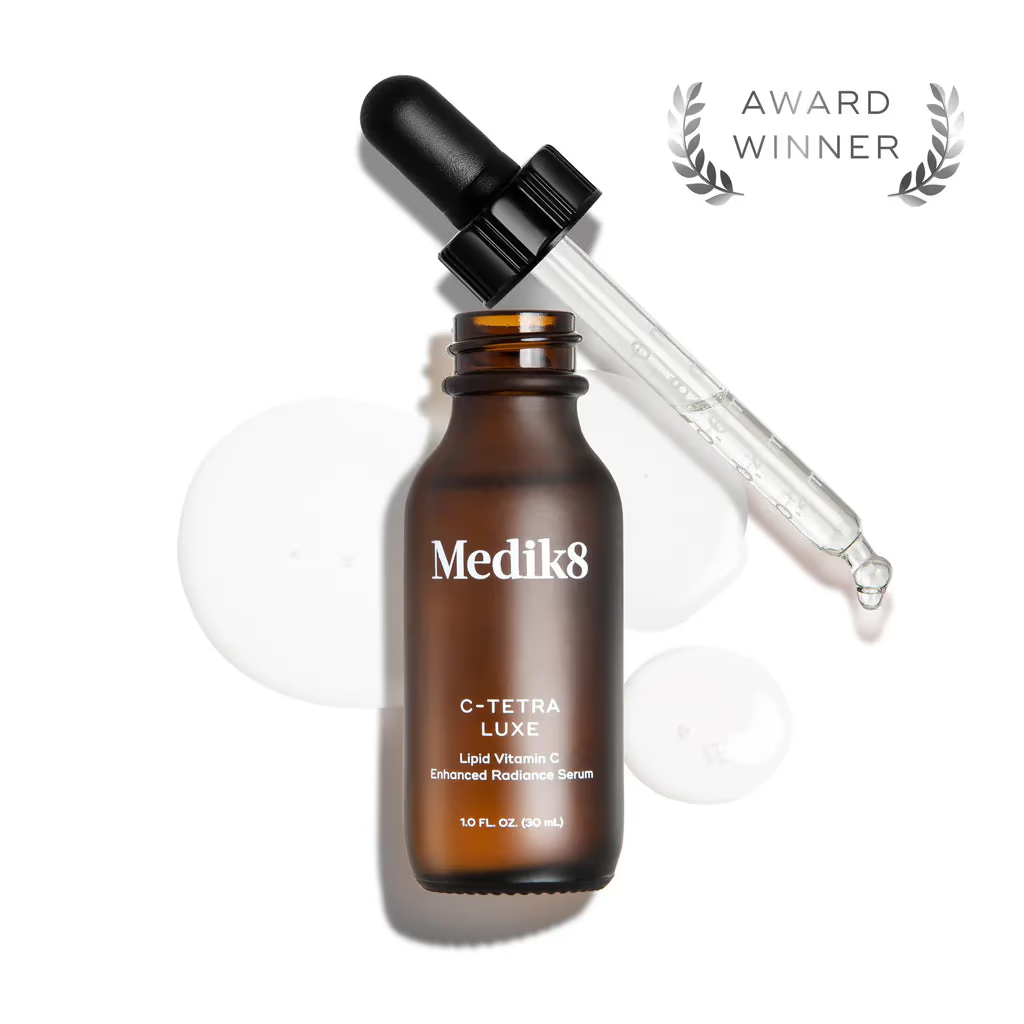
A lipid-soluble vitamin C serum using tetrahexyldecyl ascorbate — one of the most stable and skin-penetrating forms of vitamin C available. Works at a cellular level to neutralize free radicals, stimulate collagen, and protect against photoaging. Excellent for sensitive skin that cannot tolerate traditional L-ascorbic acid.
The products worth trying
Related: post-procedure skincare →
The exosome market is growing quickly, and quality varies significantly. These three represent the most accessible and well-formulated options currently available — from an affordable entry point to a clinical-grade formula with the science behind it.
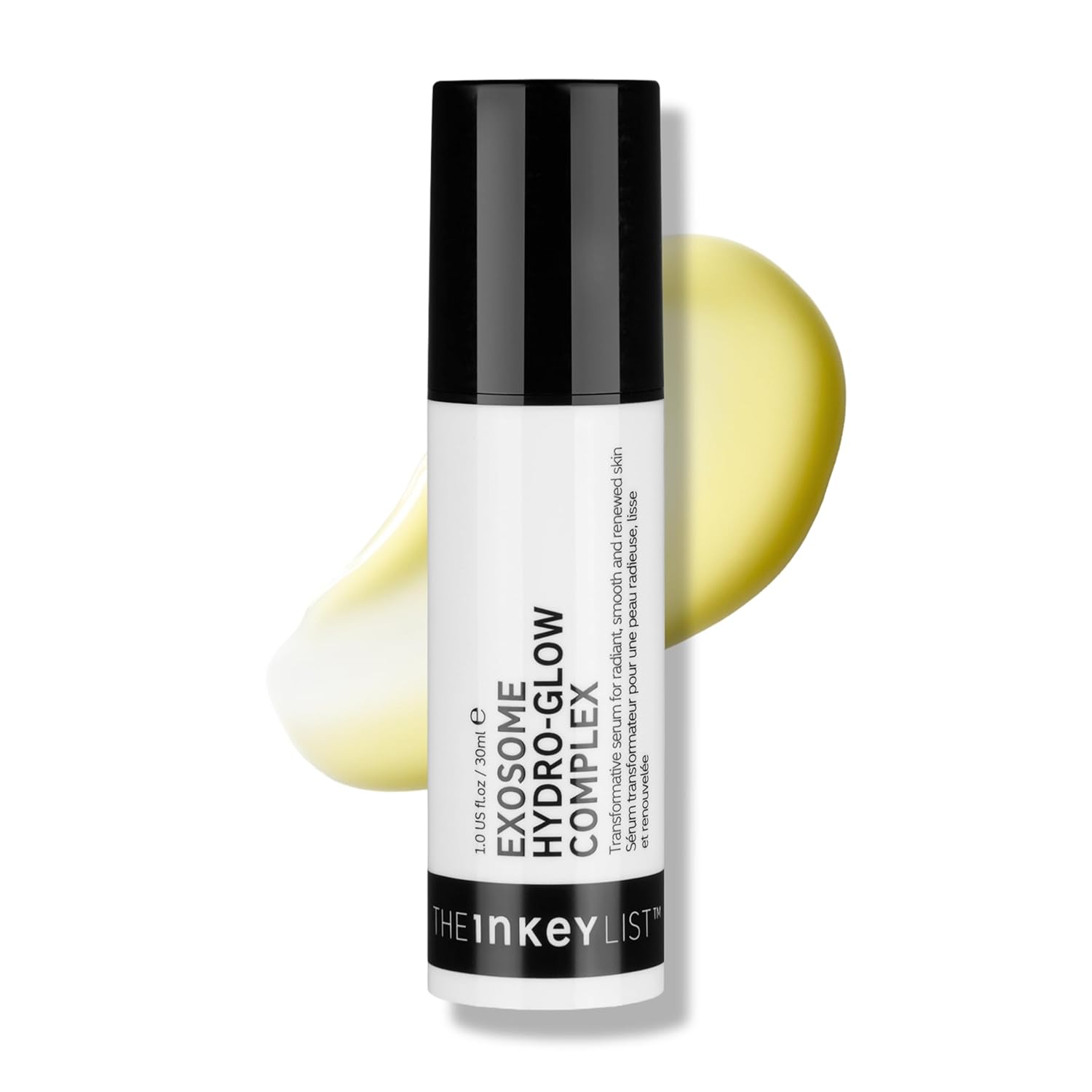
The most accessible entry point into exosome skincare. The INKEY List delivers plant-derived exosomes in a lightweight serum alongside hyaluronic acid and niacinamide — making it a practical daily driver for anyone wanting to explore exosome technology without a significant financial commitment. The hydration payoff is immediate; the cellular benefits accumulate over 6–8 weeks.
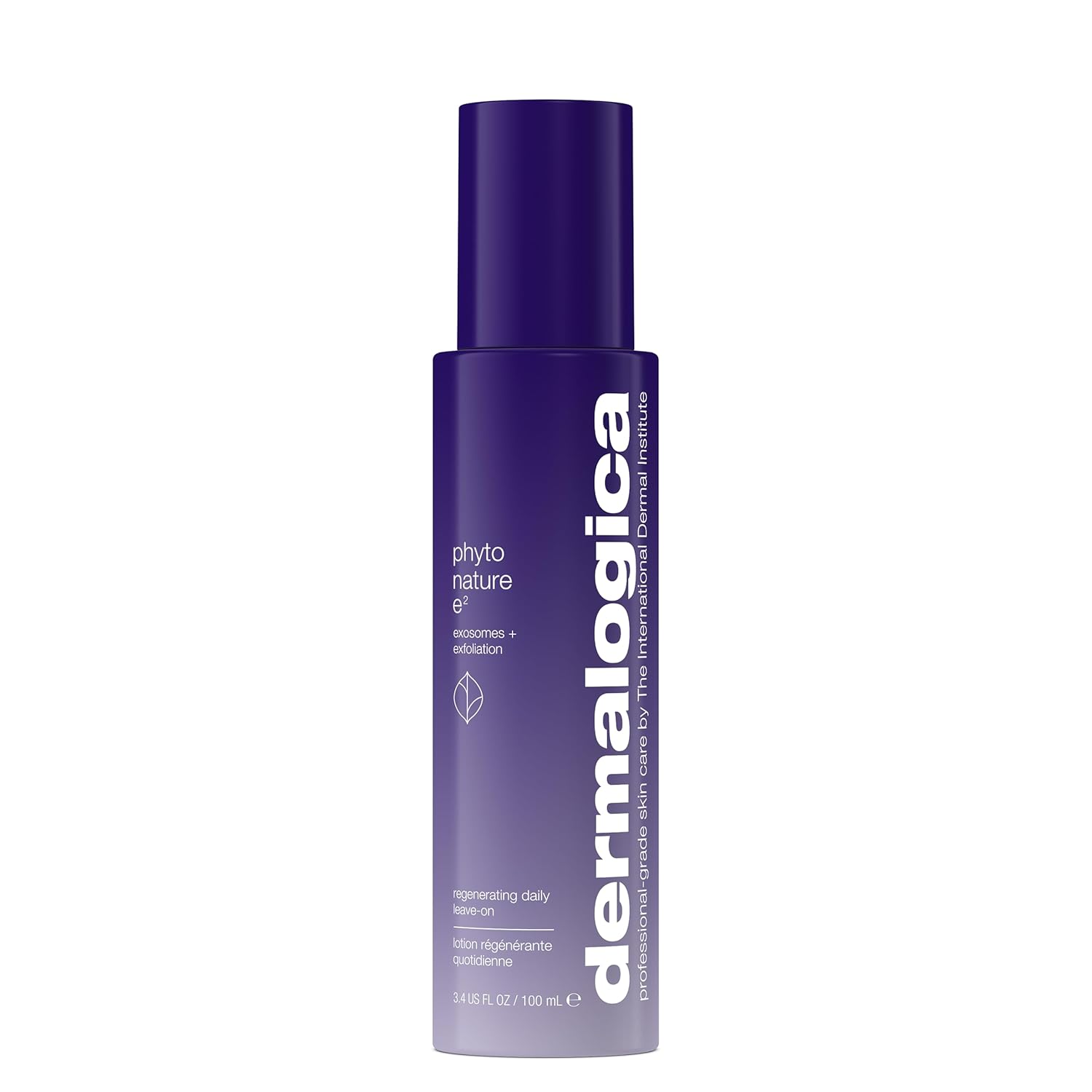
A sophisticated two-in-one formula that pairs phytoexosomes with gentle enzymatic exfoliation — an intelligent combination that prepares the skin to receive exosome signals while simultaneously improving surface texture and radiance. Dermalogica's professional-grade formulation heritage is evident in the elegance of the formula. An excellent choice for anyone who wants to combine exosome technology with daily resurfacing in a single step.

The most clinically serious formula on this list. Developed by scientists from Johns Hopkins, Plated's INTENSE Serum uses patented DNAzyme technology — a form of exosome-adjacent cellular signaling that targets DNA damage directly. The science is unusually rigorous for a consumer skincare product, and the results in independent clinical studies are among the most compelling in this category. For mature skin or post-procedure recovery, this is the top-tier choice.
The bottom line
Exosomes occupy an interesting position in skincare — grounded in genuine and exciting science, supported by promising early clinical data, but not yet backed by the decades of large-scale trials that define the gold-standard actives. That ambiguity is worth being honest about.
What's also worth being honest about is that the mechanism is unlike anything else in topical skincare. The idea of restoring cellular communication rather than simply stimulating a single pathway represents a genuinely different approach to aging — one that aligns with how skin biology actually works.
For most people, the right approach is to build a foundation first — retinoids, vitamin C, SPF, peptides — and add exosomes once those basics are in place. For those recovering from procedures, dealing with mature skin that hasn't responded to conventional actives, or looking for a gentle alternative to stronger ingredients, exosomes deserve serious consideration now.
The science will keep coming. For now, the products that exist are worth trying — and the category is worth watching closely.