I've been on Noom's microdose program for about a year. The weight loss has been modest — that's the point of microdosing — but it's been real. And somewhere around month four or five, I started noticing something I hadn't expected: a subtle softening along my cheeks and jawline. Not dramatic. Not what you'd call gaunt. But the definition I was used to seeing was slightly less there, and the skin along my jaw had a quality I can only describe as early laxity.
I wasn't alarmed — I was curious. I knew enough about skin physiology to understand what was probably happening, and I immediately started thinking about how to respond to it intelligently. I added retinol and copper peptides to my routine consistently. I started using my ZIIP nanocurrent device and MyoLift microcurrent regularly. And eventually, I did a CO2 laser treatment, which made a meaningful difference. My skin now looks better than it did before I started noticing the laxity — because I responded to it proactively rather than waiting.
I'm writing this article because I could not find a useful skincare guide for women on GLP-1s when I went looking for one. What I found was either medical content about Ozempic face that reads like a warning label, or marketing copy for overpriced "GLP-1 skincare" products that aren't doing anything your existing routine couldn't do. Neither was what I needed. So here is the article I wanted to find.
What GLP-1 medications do
GLP-1 receptor agonists — semaglutide (Ozempic, Wegovy), tirzepatide (Mounjaro, Zepbound), and others — were originally developed to manage blood sugar in type 2 diabetes. They work by mimicking glucagon-like peptide-1, a naturally occurring hormone that regulates appetite and slows gastric emptying, producing a sustained feeling of fullness and significantly reduced calorie intake. The result is often substantial, relatively rapid weight loss.
The word "rapid" is the key one for skin. Your skin is remarkably adaptive — but it adapts on its own timeline, not yours. When the fat beneath it reduces faster than the skin can contract, you get laxity. This isn't unique to GLP-1 medications; anyone who loses weight quickly through any means can experience the same thing. But because GLP-1s are so effective and so widely used, dermatologists are now seeing it at scale.
A 2025 study from Vanderbilt University found approximately 9% midface volume loss for every 10kg of total weight loss in GLP-1 patients. The effect is most pronounced in the temples, cheeks, under-eye area, and jawline — exactly where facial fat provides the structural support that keeps skin looking lifted and taut.
The severity of skin changes depends heavily on two variables: how much weight is lost and how quickly it's lost. This is why microdosers like me tend to notice subtle, gradual changes rather than the dramatic transformation that gets talked about online. Someone on a full therapeutic dose losing 40+ pounds in six months will have a very different experience than someone on a low dose losing 10 pounds over a year. Neither experience is wrong — they just require different levels of response.
The negative effects
Related: peptides for skin laxity →
— and what's driving themThe term "Ozempic face" — coined by dermatologist Dr. Paul Frank — has become shorthand for a cluster of cosmetic changes that can accompany GLP-1-related weight loss. The term is a bit of a misnomer (it's not the medication causing the changes, it's the weight loss) but it accurately describes what patients are presenting with.
As subcutaneous fat reduces, the structural scaffolding beneath skin diminishes. Cheeks hollow, the jawline softens, and under-eye hollowing becomes more pronounced. Skin that previously had fat support beneath it now has to do more work on its own — and collagen density typically isn't adequate to compensate without intervention.
Recent research suggests GLP-1 medications may directly affect the stem cells responsible for collagen and elastin production — independent of the weight loss itself. This means the skin changes aren't purely mechanical. There may be a biological component that makes skin slower to rebound even when weight loss is gradual.
Volume loss isn't limited to the face. The neck, upper arms, abdomen, and thighs are commonly affected — particularly with more significant weight loss. "Ozempic body" is becoming as recognized a term as Ozempic face in aesthetic medicine circles.
Some users report increased skin dryness and sensitivity, potentially related to changes in nutrition, hydration habits, or the metabolic shifts accompanying GLP-1 use. Not universal — I personally didn't experience this — but worth monitoring, particularly if your diet becomes lower in healthy fats during weight loss.
The positive effects — the part nobody talks about
The conversation around GLP-1s and skin tends to focus entirely on the negative. But there are clinically documented benefits that deserve equal attention, and that make GLP-1 users good candidates for certain skincare ingredients.
GLP-1 medications have demonstrated meaningful anti-inflammatory effects through cytokine modulation. For skin, this can translate to clearer, calmer complexions — and documented improvements in inflammatory conditions like psoriasis and hidradenitis suppurativa. If you've had stubborn redness or inflammation, you may notice it improving.
Glucose spikes trigger a process called glycation, which damages collagen and accelerates aging. By moderating blood sugar, GLP-1s may slow one of the key mechanisms of skin aging. This is a legitimate, science-backed benefit that most GLP-1 skin content completely ignores.
The skin changes from GLP-1 medications aren't a reason to avoid them — they're a reason to respond to them intelligently.
The skincare response
Related: at-home devices for laxity →
— what worksThe good news is that the skincare response to GLP-1-related skin changes maps almost exactly to what a well-designed anti-aging routine already looks like. You don't need specialty "GLP-1 skincare" products — you need the right actives, deployed consistently, with some additional attention to the specific mechanisms at play.
Retinoids — non-negotiable
Retinoids remain the most clinically validated ingredient for collagen stimulation and skin cell turnover. For GLP-1 users, they're especially important because they directly address the collagen deficit that drives laxity. If you're not already using a retinoid consistently, now is the time to start. If you are, consider whether you're at a strong enough concentration to produce real results. Retinaldehyde — one step closer to retinoic acid than retinol — offers more efficacy with less irritation, and is worth considering if you've plateaued on standard retinol.
Copper peptides — the underrated essential
Copper peptides (specifically GHK-Cu, copper tripeptide-1) are carrier peptides that transport copper to skin cells — a critical cofactor for the enzymes responsible for collagen cross-linking and structural repair. A 1998 study found GHK-Cu increased collagen production by 70% after one month. For skin dealing with laxity and structural support loss, this class of ingredient is one of the most targeted tools available. I added copper peptides to my routine consistently after I noticed the changes in my jaw, and they've become a permanent fixture.
DNA repair technology
One of the most compelling newer ingredient categories for GLP-1 users is DNA repair technology — specifically the DNAzyme platform developed by Johns Hopkins researchers behind Plated Skin Science. GLP-1s may affect how skin cells repair and regenerate at a fundamental level, making ingredients that address cellular damage at the source (rather than just the surface) particularly relevant.
Microcurrent — the at-home lift
Microcurrent technology delivers low-level electrical impulses that stimulate the facial muscles and increase ATP production, the cellular energy currency that powers tissue repair. It has been used in professional esthetic settings for decades, and at-home devices have become legitimately effective. I use both the ZIIP nanocurrent device (for surface-level current and ingredient penetration) and the MyoLift for deeper muscular work. Consistency is everything with microcurrent. It is not a one-session fix, but used regularly it produces visible lifting and firming that is hard to replicate with topicals alone.
The severity of your skin response will track closely with the amount and speed of your weight loss. Microdosers typically see subtle, gradual changes that respond well to a consistent at-home routine. Patients on full therapeutic doses with significant weight loss may need professional intervention — fillers, biostimulatory injectables, or devices — to address more pronounced volume loss. Know where you are on that spectrum and respond accordingly.
Products worth adding
Related: microcurrent for facial toning →
to a GLP-1 skincare routineThese are the products I've used or that I'd recommend based on their specific mechanisms and how directly they address what GLP-1 medications do to skin. Every recommendation here is here for a reason.

Johns Hopkins-developed DNAzyme technology that targets DNA damage at the cellular level — the root cause of accelerated aging. For GLP-1 users whose skin cells may be under additional regenerative stress, addressing damage at the source rather than the surface is exactly the right approach. One of the most scientifically serious serums in our directory.
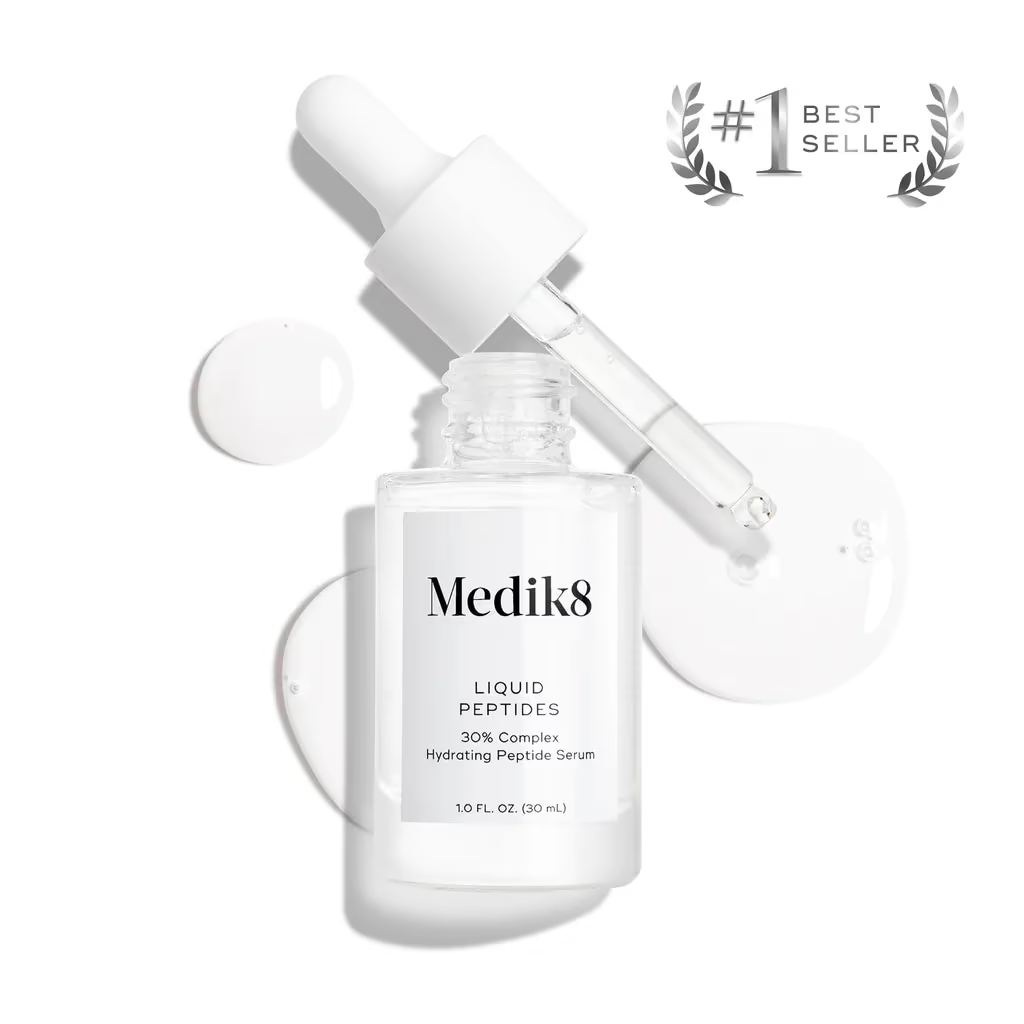
A sophisticated multi-peptide serum including copper tripeptide-1 (GHK-Cu) — the gold standard carrier peptide for collagen synthesis and structural repair. This is the product I reach for specifically for the laxity and firmness concerns that accompany GLP-1 use. Elegant formulation, well-tolerated, and one of the best copper peptide products available without a prescription.
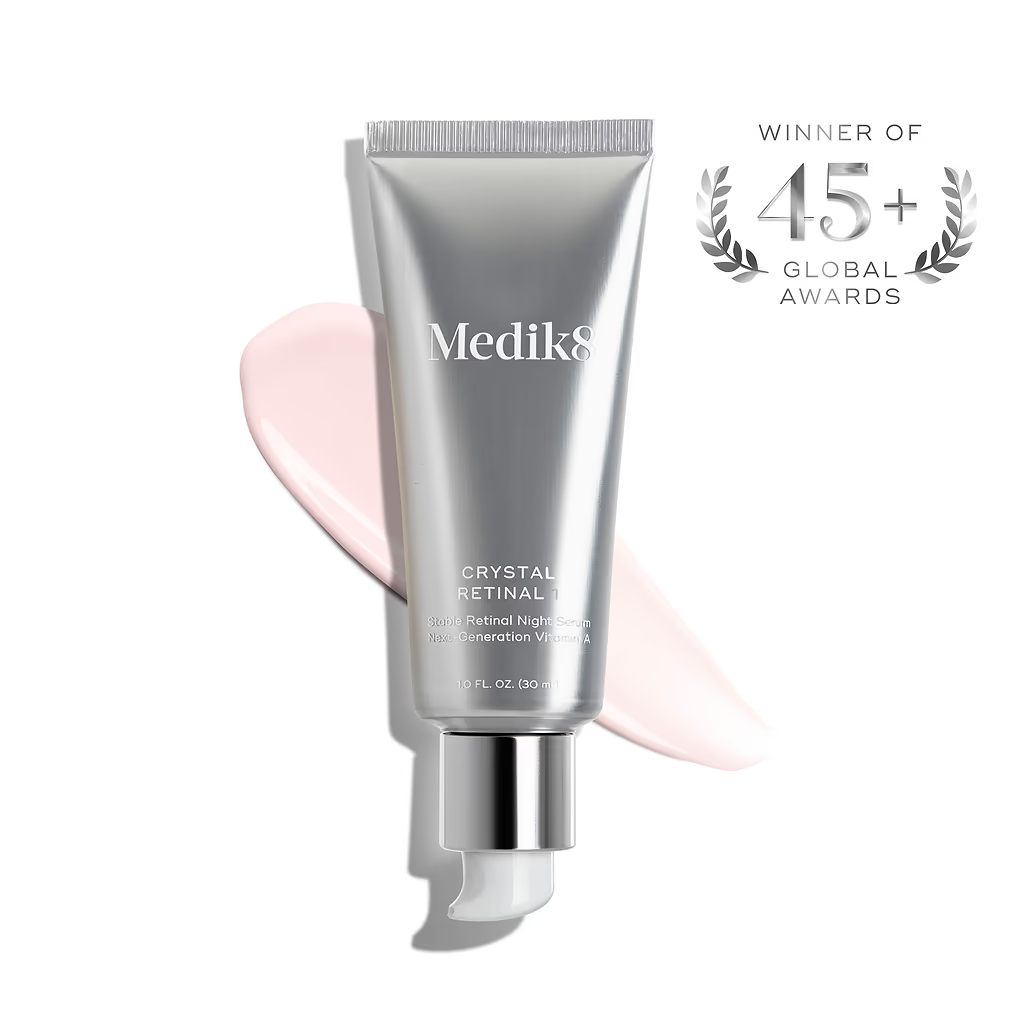
Retinaldehyde is one conversion step closer to retinoic acid than retinol — meaning faster collagen stimulation with less irritation. The encapsulated crystal delivery system releases slowly, making it well tolerated even when skin is under stress. For GLP-1 users who need a retinoid that performs, this is the most intelligent entry point. Available in strengths 1 through 10.

A physician-developed formula that conjugates a retinoid with an AHA in a single molecule — delivering retinoid-level collagen stimulation with significantly less irritation than traditional retinoids. For GLP-1 users who need strong actives but want to minimize skin stress, this is one of the most elegant formulations available. Use nightly as the cornerstone of a collagen-focused PM routine.

FDA-cleared true microcurrent device with adjustable intensity (175–400 microamps) and app-guided protocols including a 10-minute Eye Lift, Lip Lift, and 15-minute Full Face Lift. Microcurrent stimulates facial muscles and boosts ATP production — the cellular energy that powers tissue repair and lifting. For GLP-1 users dealing with laxity, consistent microcurrent use is one of the most targeted at-home interventions available. This is what I use.
When to see a dermatologist — CO2 laser
For more significant laxity — particularly in the lower face, jawline, and neck — at-home skincare and devices will only take you so far. CO2 laser resurfacing is one of the most effective professional treatments for skin tightening and collagen remodeling, and it's worth a serious conversation with your dermatologist if you're seeing changes that topicals and microcurrent aren't fully addressing. I had CO2 done and it produced a meaningful improvement. It's not a small undertaking — there is real downtime — but the results are substantive in a way that no serum can replicate.
The lifestyle layer
Related: perimenopause skincare →
— don't skip thisSkincare alone won't be enough if the foundations aren't in place. For GLP-1 users, three lifestyle factors have direct, documented effects on skin quality during weight loss.
Protein intake. Collagen is a protein. If you're eating significantly less food — which GLP-1s are designed to produce — you need to be intentional about getting enough protein to support both muscle preservation and collagen synthesis. Most dermatologists recommend prioritizing protein as the first dietary consideration for GLP-1 patients concerned about skin.
Strength training. Building and maintaining muscle has a tightening effect on the skin above it. It also improves circulation, which directly benefits skin cell health and repair. If you're on a GLP-1 and not strength training, you're leaving one of the most effective tools against laxity on the table.
Hydration. Hyaluronic acid — the molecule responsible for water-binding capacity in skin — is affected by metabolic changes. Adequate hydration supports everything else you're doing, and it's one of the simplest interventions available.
The bottom line
GLP-1 medications are legitimately changing people's lives. For women in midlife, already navigating perimenopausal skin changes alongside the effects of weight loss, they can also change your skin in ways that deserve a thoughtful, proactive response.
The key insight is this: the severity of what you'll experience depends enormously on dose and rate of loss. Microdosers will likely see subtle, gradual changes that respond well to a consistent, well-chosen routine. Higher-dose users with more significant weight loss will need to think more seriously about professional intervention alongside their at-home work.
Either way, the ingredients and tools that address GLP-1 skin changes (retinoids, copper peptides, DNA repair technology, microcurrent) are the same ones that make up a legitimately effective anti-aging routine. You're not starting from scratch. You're just prioritizing more intentionally, and giving your skin what it needs to keep up with what your body is doing.
Disclaimer: I am not a medical professional or licensed dermatologist. This content reflects personal research and experience — including my own use of Noom's microdose program — and is not intended as medical advice. Please consult a qualified healthcare provider or dermatologist before starting any medication or making changes to your skincare routine. This post contains affiliate links; see our affiliate disclosure for details.